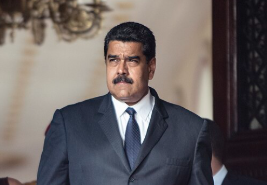
Security experts are warning that even if the United States military operation successfully removes Venezuela’s current government, there is no guarantee that what replaces it will be democratic. The Saturday strikes that captured President Nicolás Maduro have raised fundamental questions about whether external military force can create lasting democratic transformation.
Dr. Christopher Sabatini from Chatham House emphasized that assuming regime change occurs, it is by no means clear that the result will be democratic, and success would likely require sustained US engagement. The question of whether the Trump administration has the commitment for long-term involvement remains uncertain, particularly given domestic opposition to military operations in Venezuela.
Dr. Carlos Solar from RUSI noted that Venezuela’s political system has proven resilient, with the vice-president and other members of Maduro’s entourage remaining in place. He drew parallels to the transition from Hugo Chávez to Maduro, suggesting the Chavista movement may continue under new leadership rather than giving way to democratic governance.
US Attorney General Pam Bondi has announced that Maduro and his wife Cilia Flores will face drug trafficking charges in New York, with Secretary of State Marco Rubio confirming the charges relate to narcotics operations. President Trump stated the couple is aboard a ship being transported to the United States for prosecution.
The international community has responded with widespread condemnation, with UN Secretary General António Guterres warning of dangerous precedents. Major powers including China, Russia, and European nations have criticized the operation as violating sovereignty, while Latin American responses have split along ideological lines with Colombia mobilizing its armed forces in anticipation of potential refugee flows.
27